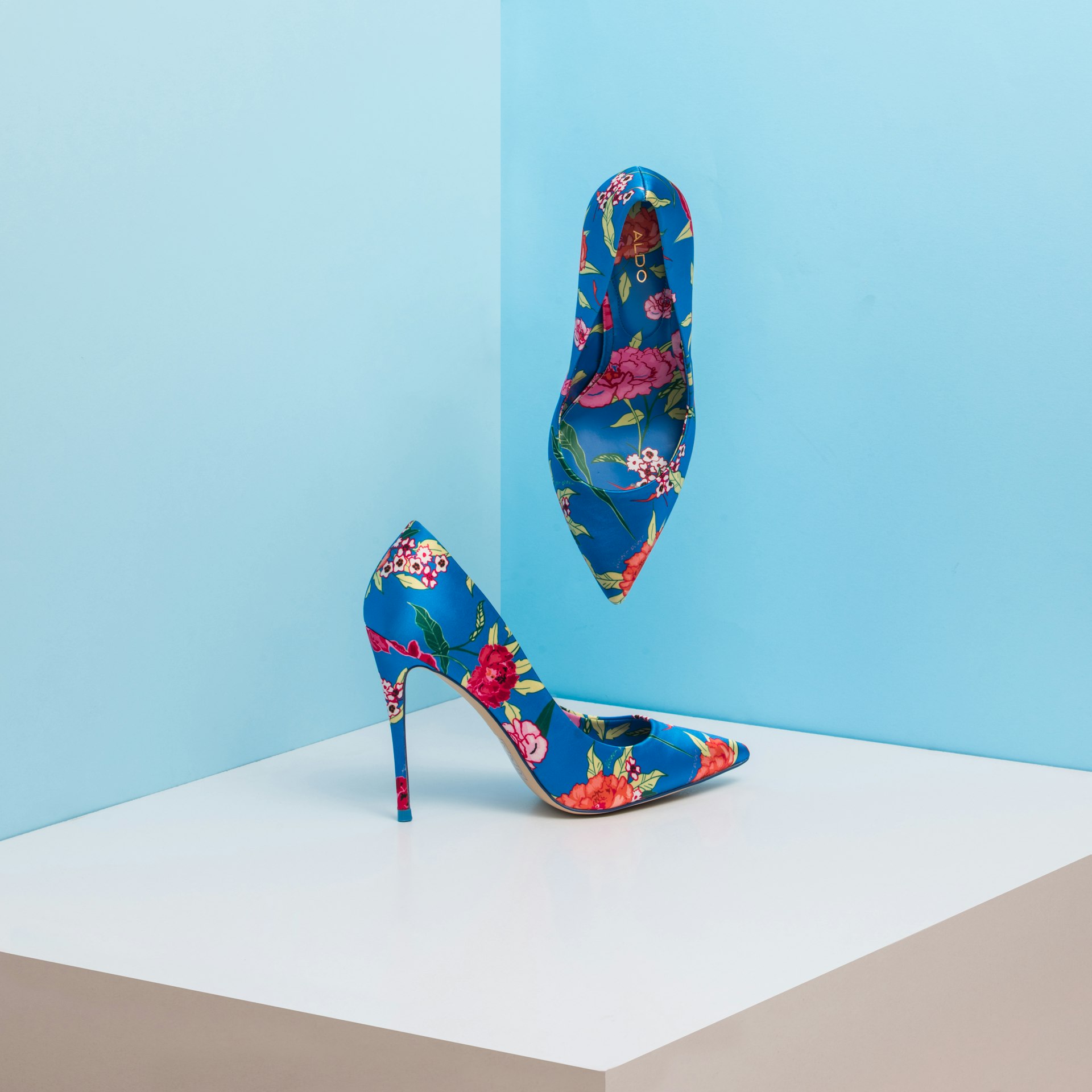
Who InventedHigh Heels?
From Persian cavalrymen to Parisian runways—the extraordinary journey of fashion's most provocative invention.
The Warrior's Secret Weapon
High heels were not born in the salons of Paris or the ateliers of Milan. They emerged from the battlefields of ancient Persia, where mounted archers discovered that a raised heel helped secure their feet in stirrups while standing to shoot. This tactical innovation—a heel typically 1 to 1.5 inches high—gave Persian cavalry a devastating military advantage, allowing warriors to rise in the saddle and fire arrows with deadly precision.
For centuries, the heeled boot remained a practical tool of warfare, its association with skilled horsemanship lending it an aura of masculine power and military prowess. Persian riders became legendary across the ancient world, and their distinctive footwear traveled with them along the Silk Road.
The heel's journey from battlefield to ballroom would take another six centuries—and a diplomatic mission that changed European fashion forever.
East Meets West
In 1599, Shah Abbas I of Persia dispatched the first Persian diplomatic mission to the courts of Europe, seeking military alliances against the Ottoman Empire. The emissaries arrived bearing gifts, exotic textiles, and most significantly, wearing their distinctive heeled boots.
European aristocrats were captivated. Here was a fashion from a distant, powerful empire—one associated with the legendary Persian cavalry. Within decades, heeled shoes had spread through the courts of Spain, France, and England. The European elite adopted heels enthusiastically, but with a crucial difference: while Persian heels were practical, European heels became purely ornamental—impractical for riding but perfect for demonstrating that the wearer need not perform physical labor.
This transformation marked the heel's first great reinvention: from instrument of war to symbol of leisure and aristocratic privilege.
“The heel was a royal prerogative—a mark of noble blood that commoners were forbidden to imitate.”
On the Court of Louis XIV, c. 1670
The Sun King's Red Soles
No figure looms larger in the history of the high heel than Louis XIV of France. Standing just 5'4", the Sun King compensated for his stature with heels as high as five inches, often painted a distinctive red. In 1670, he decreed that only members of his court could wear red heels—making footwear literally a matter of law and transforming the heel into a visual certificate of royal favor.
Louis commissioned elaborate portrait paintings showing off his legs and heels, establishing a new masculine ideal. Men's heels at Versailles featured ornate embroidery, jeweled buckles, and the famous “Louis heel”—a curved shape that remains a standard in shoe design 350 years later. The king's passion for heels drove the French fashion industry, establishing Paris as the world's arbiter of style.
This era also saw the first significant differentiation between men's and women's heels. While men wore thick, sturdy heels suited to their larger frames, women's shoes began featuring more slender, tapered heels—an aesthetic distinction that would have profound implications.
The Arc of Elevation
Key moments in the heel's journey from battlefield to runway
Persian Cavalry Innovation
Persian horse archers develop raised heels for stability in stirrups, creating the first functional high heels.
The Persian Embassy
Shah Abbas I sends diplomats to Europe wearing heeled boots, igniting aristocratic fascination with Persian fashion.
Louis XIV's Red Heel Decree
The Sun King reserves red heels for nobility, establishing the heel as a legal symbol of rank.
The Revolutionary Fall
French Revolution associates heels with aristocratic decadence. Men abandon heels; women's heel heights plummet.
Victorian Revival
The "French heel" returns for women as photography and fashion magazines spread new styles globally.
Birth of the Stiletto
Roger Vivier creates the first modern stiletto for Christian Dior, using steel reinforcement for impossibly thin heels.
Louboutin's Red Sole
Christian Louboutin paints his first red sole, creating the most recognizable luxury signature in fashion.
The Comfort Revolution
Post-pandemic shift sees luxury brands emphasizing comfort without sacrificing style; heel heights diversify.
The Numbers Behind the Glamour
The women's footwear market continues to grow at 4.5% annually.
Percentage of women in developed nations who own at least one pair of high heels.
The most commonly purchased heel height across all markets.
Roger Vivier created the steel-shanked stiletto for Christian Dior.
The Rise and Fall of Heel Heights
Average heel heights through history
When Heels Fell From Grace
The French Revolution did not merely topple a monarchy—it transformed fashion into a political statement. High heels, so intimately associated with the aristocracy of Versailles, became dangerous to wear. The revolutionaries adopted simple, flat shoes as symbols of equality and reason. Marie Antoinette reportedly wore two-inch heels to her execution in 1793—a final act of aristocratic defiance.
Men abandoned heels entirely during this period, never to return as a mainstream fashion. The association between heels and femininity, which we now consider natural, was in fact a revolutionary-era invention. For two centuries prior, heels had been equally—sometimes more—popular among men.
Women's heels also plummeted, often to just half an inch. The Neoclassical aesthetic celebrated Greco-Roman simplicity, and flat sandals became the height of fashion. It would take decades for heels to recover.
The Stiletto Revolution
The stiletto heel—named for the Italian dagger—was not a single invention but an engineering breakthrough. Before 1950, thin heels were impossible: wood and leather simply could not support body weight at such narrow dimensions. The solution came from an unlikely source: steel.
French designer Roger Vivier, working for Christian Dior, pioneered the use of a thin steel rod running through the heel's center. This “shank” could be made as slender as a pencil while remaining structurally sound. Vivier's 1954 stilettos for Dior were immediately sensational, their impossibly thin heels suggesting a kind of feminine magic that defied physics.
The stiletto transformed high heels from a fashion choice into a cultural phenomenon. Marilyn Monroe famously declared she owed her career to them. By the 1960s, stilettos had become so popular—and so damaging to floors—that many public buildings banned them, their thin points punching through linoleum and leaving permanent marks on marble.
Then & Now
Symbol of Power
Heels were worn primarily by men of the aristocracy. Red heels indicated royal favor. Height demonstrated that the wearer need not work. Heels were heavy, decorative, and a legal privilege.
Symbol of Choice
Heels are worn primarily by women across all social classes. Red soles indicate Louboutin. Height is a personal aesthetic choice. Heels are engineered for comfort and increasingly inclusive in their design.
The Red Sole Revolution
Christian Louboutin, watching an assistant paint her nails red, grabbed the polish and applied it to the sole of a prototype shoe. The lacquered red sole became fashion's most recognizable signature— and, after a landmark legal battle, a protected trademark worth billions.
Sex and the City Effect
The HBO series transformed designer heels into aspirational objects for a generation. Carrie Bradshaw's Manolo Blahnik obsession drove the brand's global recognition and established expensive heels as acceptable financial priorities for young women.
The Comfort Revolution
The pandemic accelerated a shift already underway. Luxury brands now emphasize comfort without sacrificing style. Block heels, platforms, and lower heights gain market share. Yet the stiletto endures—its impracticality is, perhaps, the point.
Empowerment or Oppression?
Few fashion items provoke as much feminist debate as high heels. Critics point to documented health risks—bunions, hammertoes, back pain, shortened Achilles tendons—and argue that heels represent the patriarchal expectation that women sacrifice comfort for male visual pleasure. Studies show women in heels are perceived as more attractive but also more vulnerable.
Defenders counter that heels represent choice and self-expression, that the confidence many women feel in heels is genuine and valuable, and that dismissing heels as patriarchal tools denies women agency over their own bodies and fashion choices. The debate itself reveals how deeply personal and political fashion can be.
What both sides might agree upon: the high heel's meaning has changed radically across centuries, from Persian military equipment to French royal privilege to feminist battleground. The shoe itself is neutral—society loads it with meaning.
“Give a girl the right shoes, and she can conquer the world.”
Attributed to Marilyn Monroe
Sources & Further Reading
- “Heights of Fashion: A History of the Elevated Shoe” — Bata Shoe Museum
- “A History of High Heels” — Victoria and Albert Museum
- “The History of Shoes” — Metropolitan Museum of Art
- “The History of High Heels: A Journey Through Time and Status” — Fashion-Era
- “Why Did Men Stop Wearing High Heels?” — BBC Culture
- “The Effect of High Heels on Women's Attractiveness” — Journal of Foot and Ankle Research
- Fashion Institute of Technology Museum Exhibitions
This narrative draws from museum collections, academic research, and fashion history archives.